Summer Camp Through a Pediatrician’s Lens
Why camp can support development, and how to help your child feel ready
By Dr. Mona Amin: Parent, Pediatrician and Recess Expert


Summer camp can bring up a lot for parents.
For some families, it feels exciting. A chance for kids to try something new, build confidence, get outside, and have experiences that look different from the school year. For others, it can come with a lot more hesitation. Will my child be okay away from me? What if they get homesick? What if they are anxious, overwhelmed, or simply not ready?
It all makes sense.
Camp is often talked about as a fun summer activity, but it can also be something bigger than that. From a developmental perspective, camp can offer children meaningful opportunities to practice independence, social flexibility, problem-solving, and confidence in a setting that is structured but still different from home.
At the same time, camp is not one-size-fits-all. Not every child is ready at the same age, for the same length of time, or for the same type of experience.
Here’s how I think about summer camp as a pediatrician and a parent.
Why camp can be so valuable
One of the biggest benefits of camp is that it gives children a chance to practice being capable outside of their usual routines.
That might mean walking into a new group, listening to another adult, managing their belongings, trying an unfamiliar activity, or finding their place socially without a parent right there to smooth every moment. Those experiences can build confidence, because children start to learn, “I can do hard things, and I can adjust.”
Camp can also support social development in a very natural way. Kids practice joining in, taking turns, navigating group rules, handling small disappointments, and connecting with peers in a different environment. For some children, that setting actually feels easier than school because the structure is more active, playful, and less focused on performance.
There can be physical benefits too. Many camps naturally encourage movement, outdoor play, hands-on exploration, and less screen time during long summer days.
And then there is resilience, the kind that grows when children face manageable challenges, have supportive adults nearby, and learn that discomfort is not the same as danger.
The concerns parents often carry

Even when parents like the idea of camp, they often have worries.
Separation anxiety is a big one, especially for younger children or kids who are slow to warm. Homesickness can also come up, particularly with longer camps or full-day programs. Parents may worry about whether their child will make friends, speak up if they need help, remember instructions, manage medications, stay hydrated, or be safe in the sun and heat.
These are valid concerns. They do not mean camp is a bad idea. They mean parents are doing what parents do, which is thinking ahead and wanting their child to feel secure.
But here’s an important reminder: Some discomfort is okay, and it can be part of how confidence grows. The goal is to find an environment where your child feels supported enough to stretch.
Signs your child may be ready
Readiness is less about age alone and more about how your child handles separation, new environments, and basic routines.
A child may be ready for camp if they can separate from you with some support, recover after an initial warm-up period, follow simple instructions from another adult, communicate basic needs, and handle changes in routine without becoming consistently overwhelmed.
To clarify, this doesn’t mean they need to run into camp without looking back. A child can be nervous and still be ready. This is pretty common for all kids.
You can ask yourself, “Can they move through discomfort with support?”
A child may need more time if they become highly distressed with separation and do not recover, cannot yet communicate needs in a reliable way, or have sensory, emotional, or behavioral challenges that make a camp setting feel consistently dysregulating rather than gently stretching.
For neurodivergent children or kids with sensory, emotional, or communication differences, camp can still be a positive experience, but the right support matters. It helps to ask about staff training, transitions, sensory accommodations, visual schedules, quiet spaces, and how behavior is supported. A thoughtful environment can make a big difference in how a child experiences camp.
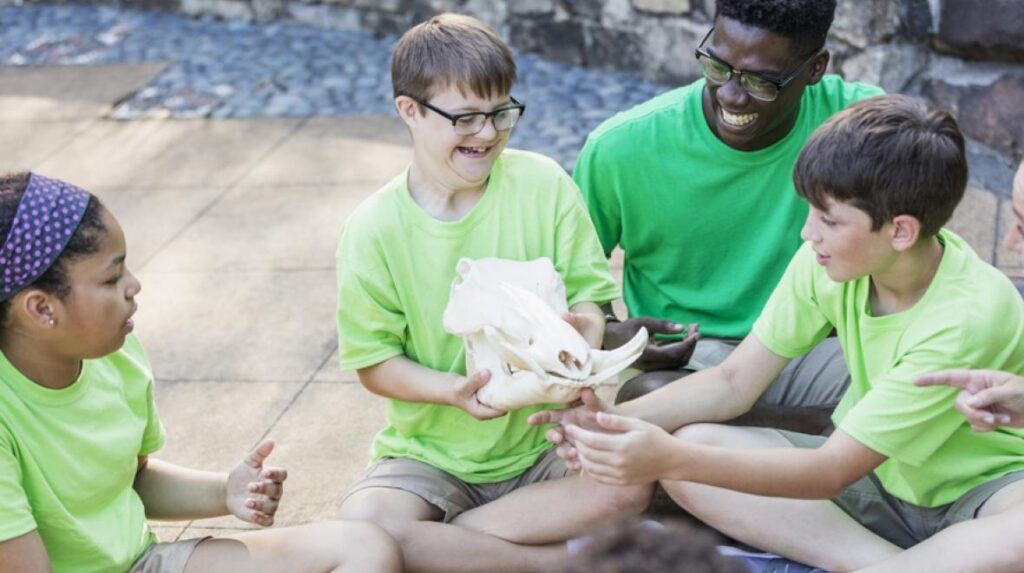
And even then, more time does not always mean skipping camp altogether. It may mean starting smaller, like a shorter program, a parent-child class, or a camp with a lower counselor-to-child ratio and a more predictable structure.
Sometimes readiness is not just about whether a child can do camp, but what kind of camp fits them best. A child who struggles in large, loud, fast-paced settings may do better in a smaller group with more predictability. A child who loves movement may thrive in an outdoor or sports-based camp, while another may feel more comfortable in an art, nature, or specialty program. The goal is not to force a fit. It is to find a setting where your child can stretch without feeling constantly overwhelmed
How to prepare your child emotionally
Preparation helps, especially for children who do better when they know what to expect.
Talk about camp in a calm, confident way before it starts. Walk through what the day may look like, who will help them, where their things will go, and what they can do if they feel nervous. Keep it simple and reassuring.
You can say something like: “You’ll have a grown-up there to help you. You might feel excited and a little nervous, and both of those feelings are okay. New things can feel big at first.”
This is also a good time to practice small skills that can help them feel more capable, like opening their lunch, asking for the bathroom, putting on sunscreen with help, changing for swim, or carrying their backpack.
If your child has specific worries, sensory needs, toileting concerns, difficulty warming up, or medical needs, it can help to share that with camp staff ahead of time. A quick conversation before day one allows staff to support your child more effectively and helps your child feel more understood from the start.
If your child is nervous, try not to promise that they will not feel sad or miss you. That usually backfires, because if those feelings do show up, they may think something is wrong. Instead, let them know that missing you and still having a good day can both be true.
What to do if your child is anxious or resistant
If your child says they do not want to go, try to get curious before jumping into reassurance or persuasion.
Sometimes the resistance is about separation. Sometimes it is about fear of the unknown, social worries, toileting concerns, or a past experience that felt hard. The more specific you can get, the more helpful your response can be.
You do not need to talk them out of their feelings. You want to help them feel understood while also holding calm confidence.
That can sound like: “I hear that this feels hard. New things can feel that way. I’m going to help you get ready, and your camp grown-ups will help you too.”
What tends to help most is empathy plus steadiness. Not rescuing immediately at the first sign of nerves, but also not dismissing what your child is feeling.
At drop-off, keep goodbyes short, calm, and predictable. Long or emotional goodbyes can make separation harder. A simple routine like a hug, a kiss, a clear ‘I’ll be back after camp,’ and then leaving, often works better than lingering or sneaking out. Your child takes cues from your confidence, even if they are having a hard moment.
The medical checklist for camp
There is also the practical side of camp, which is important too.

Before camp starts, make sure forms are completed clearly and that the camp knows about allergies, asthma, seizure history, diabetes, or any other medical needs. If your child takes medication, confirm exactly how it should be stored and given, and make sure it is labeled properly.
It is very important to confirm your child’s camp is allergy-friendly if your child has a food allergy and make sure to inquire how meals are served for more confidence in their plan.
Pack with summer in mind: sunscreen, a hat, a labeled water bottle, extra clothes, and anything needed for bug protection if the camp allows it.
Hydration, sleep, and heat safety matter more than many parents realize. Camp is often more physically demanding than a regular school day, and kids can come home overtired, underhydrated, or dysregulated simply because their bodies are adjusting. Earlier bedtimes, easy snacks, and lower-key evenings can make a big difference during those first couple of weeks.
The part parents feel too
Sometimes parents feel the transition just as much as their child does…or more.
Letting your child go off into a new space, especially one where you are not there to see every detail, can stir up your own anxiety. That is normal. It is hard to watch your child stretch into independence when part of you wants to keep everything comfortable and familiar.
But this is often where growth happens for both the parent and child.
What your child needs most is your belief that they can handle something new with support. And when you send that message calmly, even if you are feeling emotional inside, they borrow that confidence from you.
Final thoughts
Summer camp does not have to be a major milestone to be meaningful.
It may be a chance for a child to walk into something unfamiliar, find their footing, and come out a little more confident than before. For some kids, it leads to new friendships, new skills, or a stronger sense of independence. For others, it shows you they may need more time, a different setup, or more support before taking that step.
If a child is melting down before every camp day, staying distressed throughout the program, or coming home so overwhelmed that it is affecting sleep, eating, or behavior in a big way, that is worth paying attention to. Sometimes kids need more time, a different camp structure, or a shorter introduction before trying again. Not every challenge needs to be pushed through.
All of that is useful information.
Camp can offer opportunities to grow in ways that feel supportive, developmentally appropriate, and manageable. It’s about helping them build trust in themselves over time.

Dr. Mona Amin is a board-certified pediatrician, parenting educator, and the voice behind PedsDocTalk, where she reaches over 2 million parents with compassionate, research-backed guidance on child development, health, and parenting. She’s also the Chief Medical Officer at Poppins, a pediatric parenting and telehealth platform, and is currently working on a book, a children’s television show, and other incredible projects that support families.
What makes Dr. Mona the perfect partner for Recess? She understands that healthy childhood foundations aren’t just built in the doctor’s office – they’re built through play, exploration, movement, and the everyday experiences that shape how children see themselves and the world around them. Her expertise bridges pediatric medicine and child development in a way that helps parents make informed, confident choices about camps and activities.

At Recess, we make it easier to find camps that match your child’s personality, interests, and readiness level, whether that’s a half-day intro program, a high-energy sports camp, or something more creative and low-key. Because when the fit is right, kids don’t just get through camp… they grow from it.
Ready to find a camp that feels like a good fit for your family?