The 2026 Austin Summer Camp Guide: Expert Tips, Timing & Top Camps
Why child development experts recommend structured summer activities, and how to plan without the stress
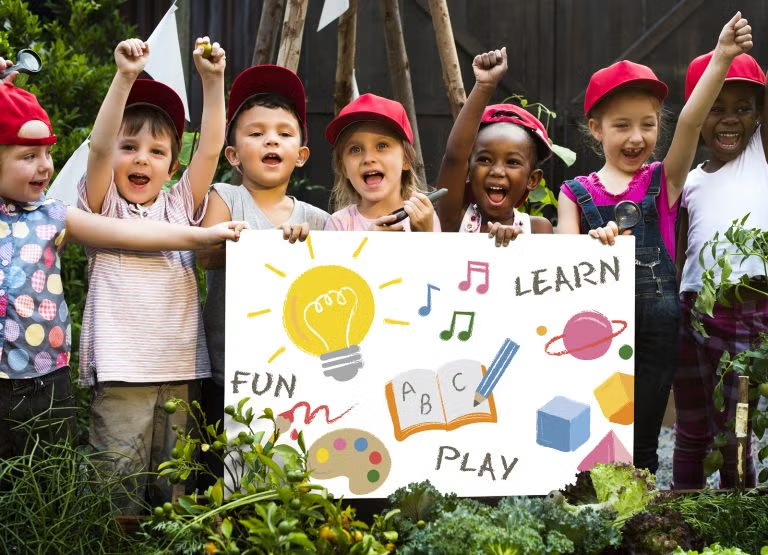
If you’re an Austin parent wondering when to start planning summer camps, you’re asking the right question at exactly the right time. The beginning of the year is when Austin’s summer camp market opens up: providers release full schedules, early bird discounts go live, and you still have your pick of dates, times, and specialty programs.
Here’s what I’ve learned from thousands of conversations with Austin parents: summer camp planning isn’t really about summer. With months of kids out of school while parents are still working, it becomes more about coverage for your kids during those summer months. Which then becomes more about removing a major source of stress from your life and at the same time – giving your child experiences that support their growth.
The next 2 sections are for parents who haven’t ventured into the summer camp chaos before, and need guidance on how to best structure their kid’s summers.
If this isn’t you, jump to the good stuff for a list of top camps in Austin so you can get straight to scheduling!
The Research Says Kids Need Structure (But We Know It’s Complicated)
Child development research is clear: kids thrive with a mix of structured and unstructured time during summer. Completely unstructured summers can lead to learning loss and increased anxiety, especially for school-age children.
But here’s what the research doesn’t tell you: how overwhelming it is to actually find and afford those structured experiences.
As a first-time mom myself, I get it. You’re trying to:
- Find camps that are actually enriching (not just babysitting)
- Navigate dozens of provider websites with inconsistent information
- Compare prices that seem to range wildly for similar programs
- Figure out if a camp is worth the cost or just good at marketing
- Coordinate schedules across multiple weeks and providers
- Stay within budget when costs add up fast
This is exactly why we created Recess. We wanted a single place where Austin parents could discover vetted, quality providers, compare options easily, understand what makes each camp developmentally appropriate, and actually book without the headache. Because finding the right summer experiences for your child shouldn’t require a PhD in Google searching or a full-time research job.
So let’s break down what the experts say kids need, why early planning makes your life easier, and how to choose camps that are worth both the money and your child’s time.
What Is Summer Slide? Understanding Summer Learning Loss

Summer slide (also called summer learning loss) refers to the academic regression many children experience during long summer breaks. According to research from the National Summer Learning Association, students can lose the equivalent of 2-3 months of reading and math skills over a completely unstructured summer.
Here’s what makes this particularly concerning: the effects compound. Johns Hopkins researchers found that by fifth grade, summer learning loss can account for two-thirds of the achievement gap between lower and higher-income students.
What Child Development Experts Say About Summer Structure
Dr. Matthew Boulay, founder of the National Summer Learning Association, explains that summer learning loss happens because children’s brains need consistent engagement. “The brain is like a muscle,” he notes. “Without regular use, skills atrophy.”
But here’s the crucial part that many parents misunderstand: preventing summer slide doesn’t mean drilling flashcards or creating a school-like environment at home.
According to child development experts, the most effective approach combines:
- Structured activities that keep kids intellectually engaged (camps, classes, programs)
- Unstructured free time for creativity, boredom, and independent play
- Social interaction with peers to maintain social-emotional skills
- Physical activity to support cognitive function and executive skills
The Right Balance: Structure Without Over-Scheduling



Dr. Peter Gray, research professor at Boston College and expert on child development, cautions against over-scheduling. “Children need substantial blocks of unstructured time to develop creativity, problem-solving, and emotional regulation,” he explains.
So what does the right balance look like? Child development experts recommend:
- 3-5 structured activities per week for school-age children (ages 5-12)
- 2-3 full days of unstructured time for free play, family time, and boredom
- Variety in activity types: cognitive (STEM, reading), creative (arts, music), and physical (sports, outdoor)
For Austin families, this might mean: STEM camp Monday-Wednesday mornings, art class Friday afternoon, and long stretches of pool time, playground visits, and backyard play in between.
Why It Pays to Plan Austin Summer Camps Early
1. Best Selection and Availability
Most Austin summer camps release their full schedules well in advance of summer. Popular programs like Thinkery camps and specialty sports programs fill up quickly, sometimes months before peak weeks even begin.
2. Significant Early Bird Savings
Many Austin camp providers offer early bird discounts of 10–25% for bookings made ahead of time. Planning early can lead to meaningful savings for families.
3. Reduced Parental Stress
Parents who plan ahead often experience less stress when it comes to finding quality programs, coordinating work schedules, and managing summer logistics. It also gives more flexibility to spread out costs over time.
4. Time to Prepare Your Child
Child psychologists recommend allowing several weeks of preparation for kids trying new activities or attending camp for the first time. Booking early gives you time to visit providers, read books about camp together, and build excitement gradually.
How to Plan Your Austin Summer: A Step-by-Step Guide
Step 1: Identify Your Anchor Weeks
Pull up your calendar and mark:
- Weeks you need full-day care (work commitments)
- Weeks you can be flexible (vacation time, lighter work weeks)
- Weeks you want completely unscheduled (family trips, visiting relatives)
Pro tip: Most Austin parents need 6-8 weeks of structured camps between late May and mid-August. You don’t need to book all 10 weeks.
Note we are adding school calendars to Recess very soon so you can match up your kid’s calendars for easy scheduling.
Step 2: Consider Your Child’s Developmental Stage
Ages 3-5: Look for play-based programs with experienced early childhood educators. Shorter camp days (half-day or 3-4 hours) work best. Focus on social skills, creativity, and gross motor development.
Ages 6-8: Mix of skill-building and exploration. Full-day camps become more appropriate. Introduce new interests alongside familiar ones.
Ages 9-12: Deeper dive into specific interests (coding, theater, competitive sports). Leadership and independence-building opportunities become important.
Step 3: Choose 2-3 “Anchor” Camps
Rather than booking your entire summer today, secure 2-3 anchor weeks:
- One specialty camp in your child’s primary interest area (STEM, arts, sports)
- One multi-week or flexible program that offers consistency
- One “stretch” camp that introduces something new
This gives you structure without over-committing before you know how summer is actually unfolding.
Step 4: Leave Breathing Room
Schedule at least 2 completely unstructured weeks, 3-4 long weekends for spontaneous family time, and buffer weeks in case camps don’t work out or your child needs a break.

Top Austin Summer Camps 2026: Our Curated Picks
(List will be continuously updated!)
🔬 Best STEM Camps in Austin
My Coding Place
Ages: 7-16 | Central Austin | Weekly sessions May-September
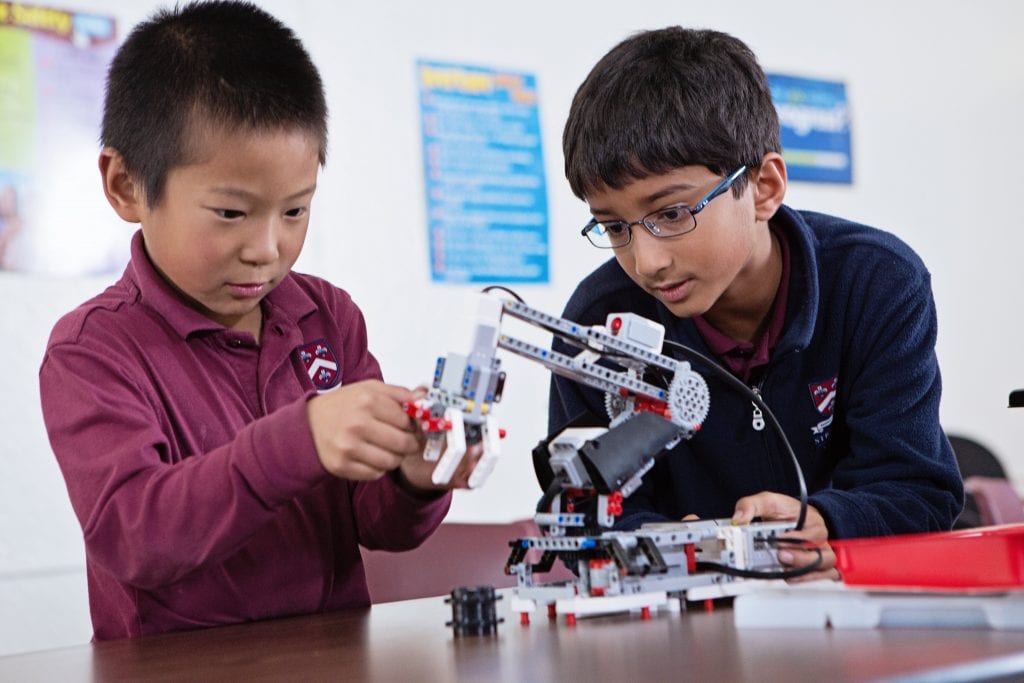
Coding at My Coding Place teaches computational thinking, problem-solving, and persistence: skills that transfer to all academic areas, according to research from MIT’s Media Lab.
Asmbly Makerspace
Ages 8-17 | North Austin | Camps throughout the summer
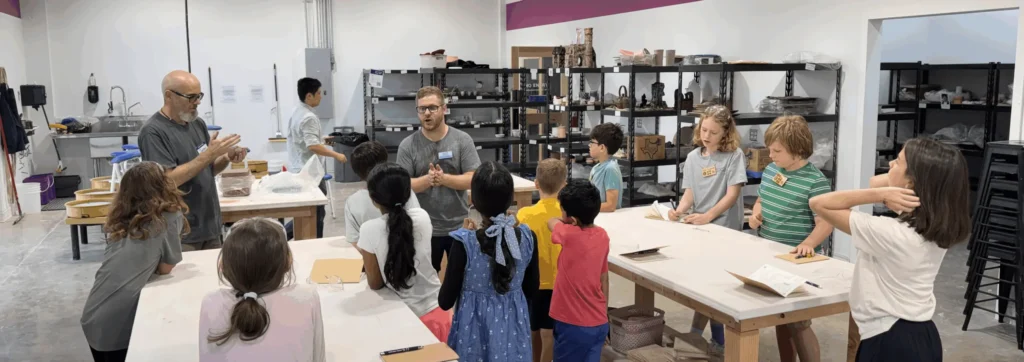
Asmbly Makerspace camps give kids hands-on experience with real tools and technology, from woodworking to 3D printing, as they design and build their own creations. It’s a confidence-building environment where creativity, problem-solving, and “I made this!” moments come to life.
Club SciKidz Austin
Ages 4-15 | South Austin | Different camps for different ages
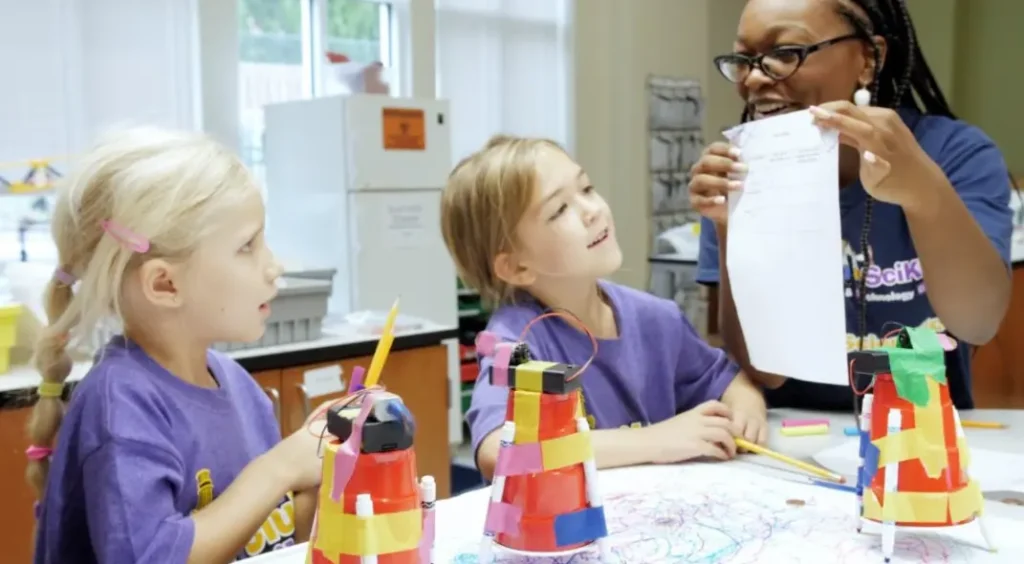
Club SciKidz Austin camps turn science into hands-on fun, with kids diving into experiments in topics like chemistry, robotics, and engineering. It’s an engaging way to spark curiosity, build critical thinking skills, and make learning feel like play.
CompuChild of North Austin
Ages 7-14 | North Austin/Cedar Park

CompuChild North Austin camps introduce kids to the world of STEM through hands-on experiences in coding, robotics, AI, and game design, all in a collaborative, supportive environment. Kids build real skills while strengthening problem-solving, creativity, and confidence as they bring their ideas to life.
Snapology of Dripping Springs
Ages: 3-11 | Dripping Springs/Bee Cave
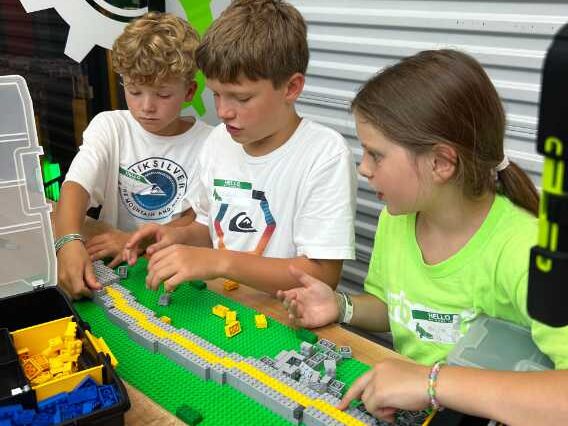
Snapology Dripping Springs camps bring STEM to life through hands-on building, coding, and robotics challenges using tools like LEGO® and technology. Kids build real problem-solving skills, creativity, and confidence, all while having so much fun they don’t even realize they’re learning.
🎨 Best Arts Camps in Austin
Umlauf Sculpture Garden + Museum
Ages: 5-10 | Central Austin

Unique, incredible camps that mix nature and arts, that will give your kiddo one of their favorite summer experiences.
Cherrywood Treehouse Art Studio
Ages 8-12 | Northeast Austin
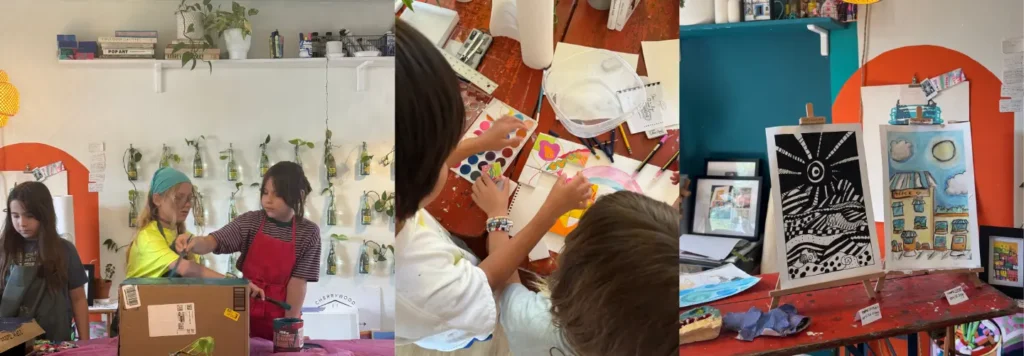
Cherrywood Treehouse Art Studio camps give kids the chance to explore painting, clay, drawing, and mixed media in a small, supportive setting that encourages creativity and self-expression. It’s a confidence-building environment where kids can experiment freely, make new friends, and feel proud of what they create.
Crafternoon ATX
Ages 10-14 | Northeast Austin
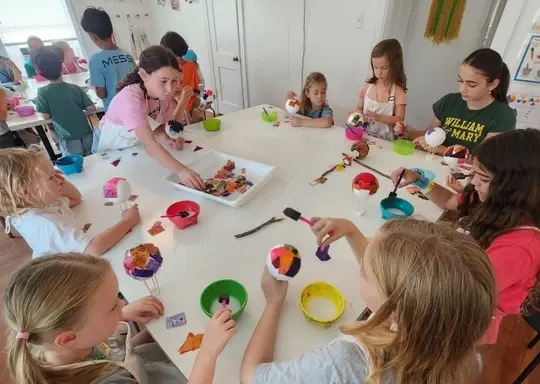
Crafternoon ATX camps offer a creative, nature-inspired space where kids explore art through hands-on projects, storytelling, and play. In small, supportive groups, kids build confidence, self-expression, and real-life skills while connecting with others and the world around them.
Squizzle Brand Camp
Ages 10-16 | South Austin

Squizzle is a hands-on, design-forward enrichment program where kids 10–16 learn how to turn everyday products into unforgettable brands. Through guided brainstorming, prototyping, and storytelling, Squizzlers create their own logos, packaging, mascots, branded merch, and more.
Art Amore Studios
Ages 5-18 | North Austin
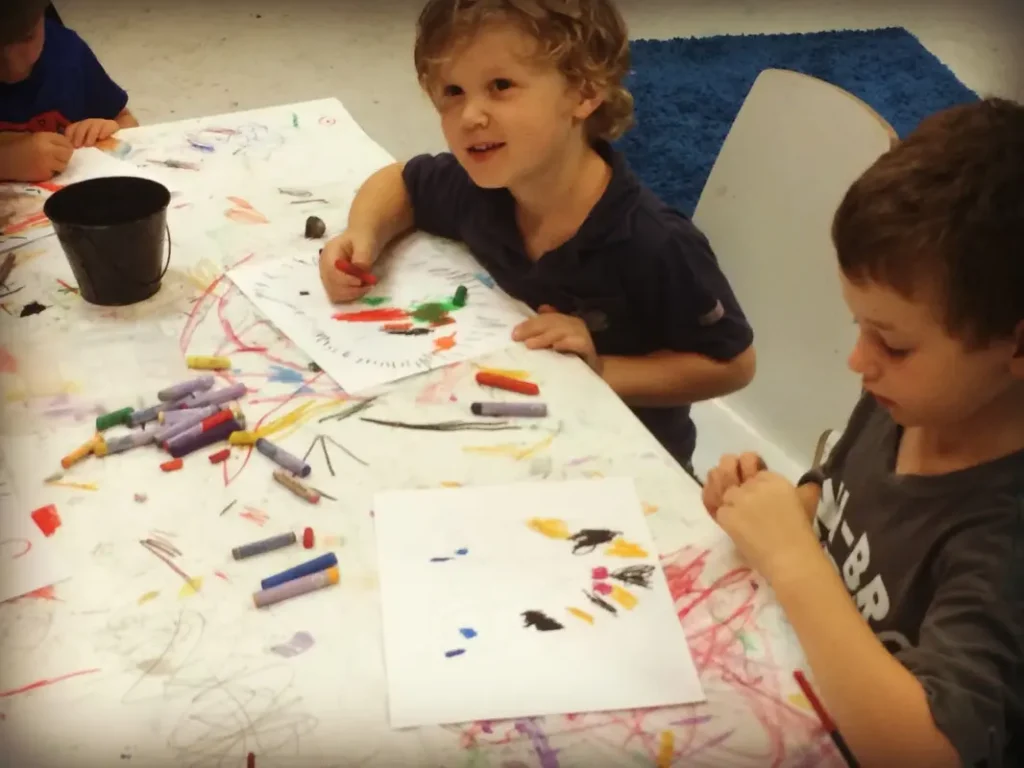
Art Amore Austin camps are a colorful, hands-on experience where kids explore different art styles, mediums, and themes each week, from painting to mixed media. It’s a playful, skill-building environment that encourages creativity, self-expression, and the confidence that comes from creating something uniquely their own.
Kidcreate Studio
Ages 3-12 | North Austin

Kidcreate Studio offers a perfect blend of art and science education, where children can explore creativity and scientific concepts through interactive activities. From messy art projects to exciting science experiments, Kidcreate Studio encourages kids to unleash their imagination, build their confidence, and develop a love for both artistic expression and scientific discovery.
Saplings Studio
Ages 5-12 | North Austin
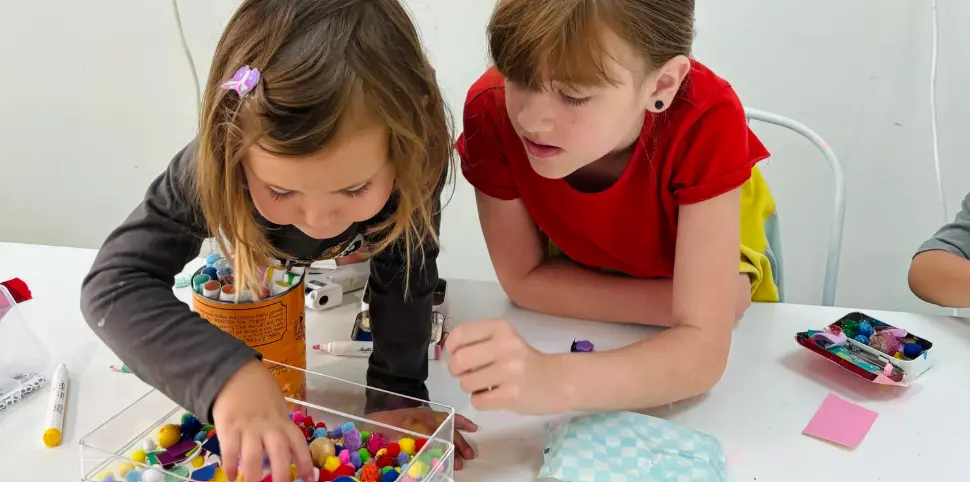
At Saplings Studio children have access to all the art materials under the sun. It’s a creative haven and you can witness the magic unfold without worrying about clean up.
👩🍳 Best Cooking Camps in Austin
Cooking camps give kids hands-on experience in the kitchen while building real-life skills like following directions, measuring, and time management. As they create and try new foods, kids gain confidence, independence, and a sense of accomplishment, all while expanding their creativity and willingness to explore new things.
Kids Chem Cook
Ages 5-14 | Austin & Buda
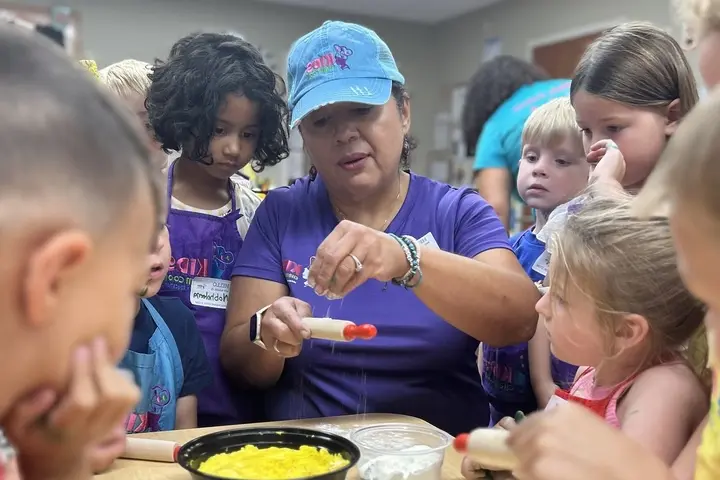
Kids Chem Cook Austin camps blend hands-on science experiments with cooking, letting kids mix, measure, and create edible projects while learning real STEM concepts. It’s a fun, confidence-building way for kids to explore curiosity, creativity, and real-life skills all at once.
Young Chefs Academy
Ages 7-14 |

Young Chefs Academy camps are immersive, hands-on cooking experiences where kids learn real kitchen skills like food prep, baking techniques, and kitchen safety while creating new recipes each day. It’s a fun, confidence-building environment that blends creativity, independence, and teamwork, helping kids develop skills that go far beyond the kitchen.
⚽ Best Sports & Movement Camps in Austin
Not just for getting your kiddos energy out each day (but one of the most important benefits!)
Sports camps develop coordination, strength, and body awareness while teaching kids teamwork, communication, and resilience. They learn to set goals and develop the discipline and strategic thinking that translates to success in school and life.
Austin Youth Fitness
Ages: 4-11 | Pease Park | Weekly sessions all Summer
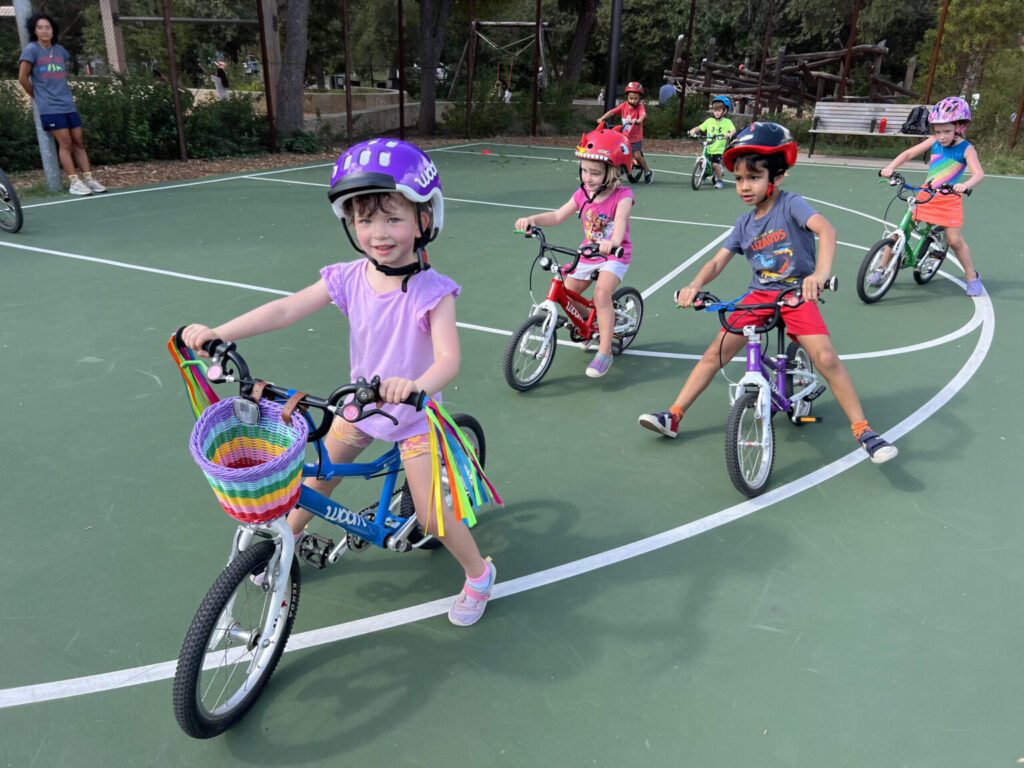
Austin Youth Fitness specializes in joyful movement that meets kids exactly where they are. Their Fit n’ Fun classes combine age-appropriate strength, agility, and confidence-building challenges. For kids ready to roll, the biking add-on options introduce safe riding skills, balance, and real-world biking adventures around the city. They offer both beginner and “advanced” biking camps, which you can add-on to the Fit n’ Fun camp to block out a full day of fun, or you can just sign up for biking in the afternoon!
Texas Rowing Center
Ages: 7-18 | Lady Bird Lake | Sessions all Summer for Elementary, Middle, and High School students
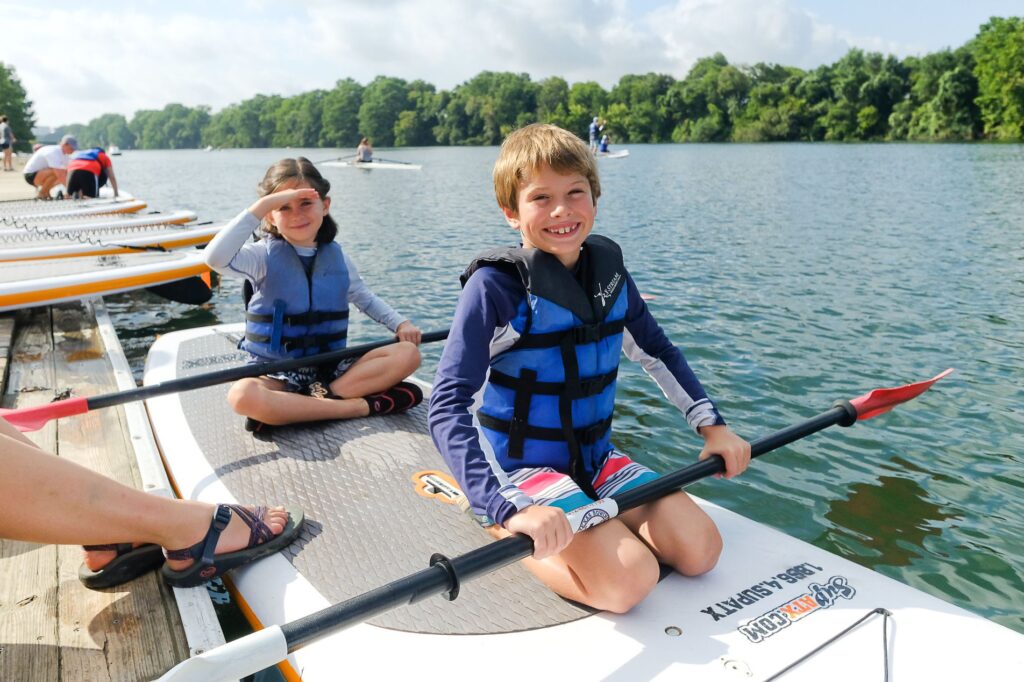
At Texas Rowing Center, kids get out on the water and learn the fundamentals of rowing in a supportive, team-oriented environment. Campers build endurance, technique, and teamwork while spending their days outdoors on Lady Bird Lake. No prior rowing experience needed.
Capital Gymnastics
Ages: 4-13 | Cedar Park
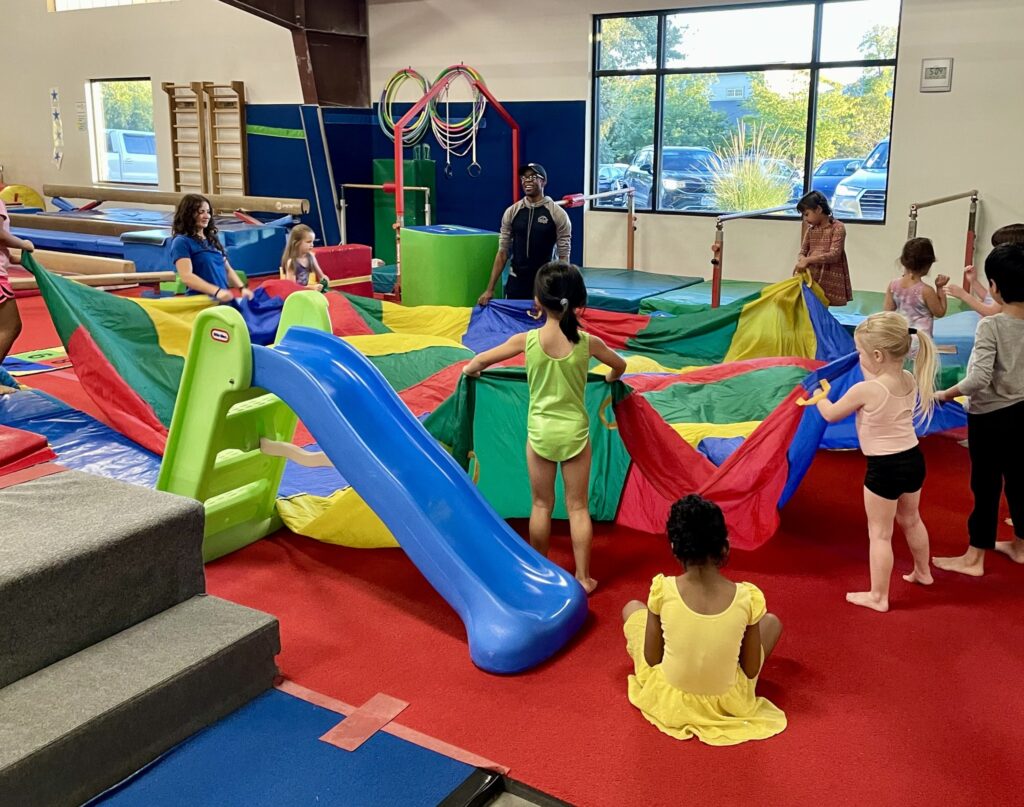
Capital Gymnastics blends movement and creativity through traditional gymnastics classes and themed camps. Their STEM Builders and Brainiacs Week adds hands-on building challenges, problem-solving games, and creative experiments, paired with gymnastics stations, crafts, and supervised free play.
Kula Karate
Ages: 4-11 | Central Austin
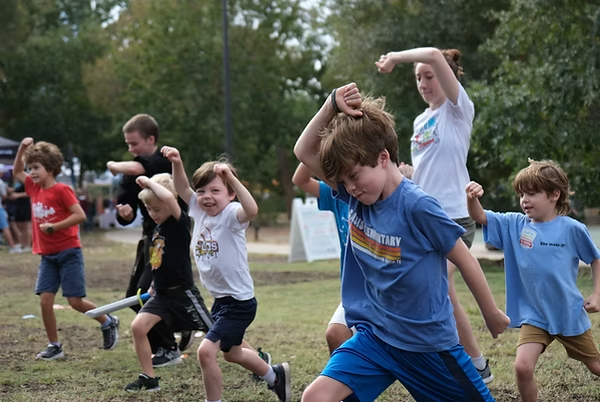
Kula Karate focuses on discipline, respect, and self-confidence through martial arts training. Classes emphasize proper technique, listening skills, and personal responsibility in a welcoming, structured environment.
Skate Vida
Ages: 5-18 | North Austin at The Pond Hockey Club

Skate Vida helps kids build confidence on the ice in a supportive, beginner-friendly environment. Campers learn ice skating fundamentals like balance, stopping, and basic skills through games, drills, and guided practice. All levels are welcome, with an emphasis on safety, encouragement, and having fun while learning something new.
Hello Dancer
Ages: 3-7 | Central Austin

Hello Dancer offers joyful, low-pressure dance classes that encourage creativity and self-expression. Kids explore movement through music, storytelling, and imaginative play, making it an ideal introduction to dance.
🧑🎤 Best Music & Performing Arts Camps in Austin
Performing arts and music camps give kids a creative outlet to express themselves through singing, acting, and movement while building confidence and stage presence. As they collaborate, rehearse, and perform, kids strengthen communication skills, teamwork, and resilience, all while discovering their voice and having a whole lot of fun.
The Hideout Theatre
Ages 5-18 | Downtown Austin
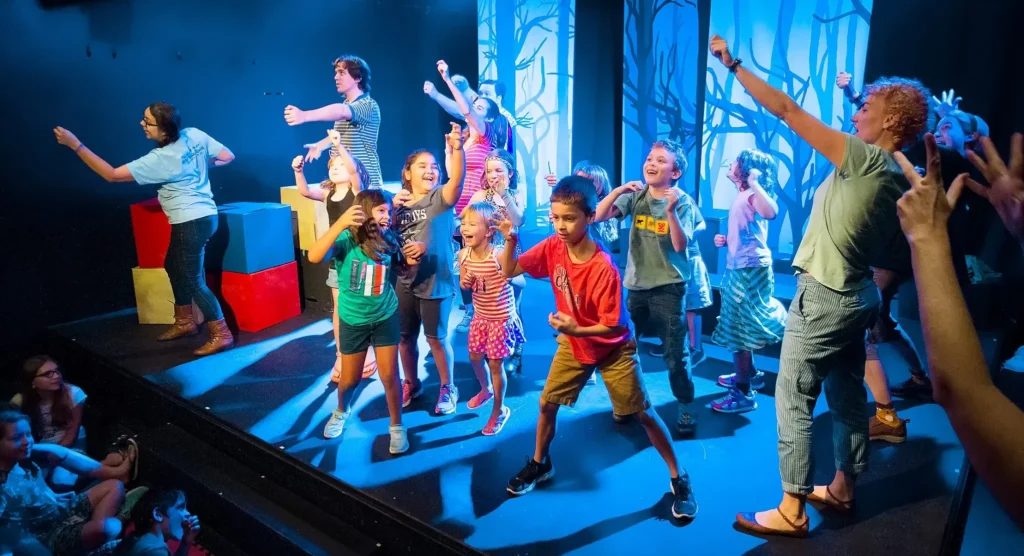
The Hideout Theatre camps introduce kids to improv and storytelling in a playful, supportive environment where creativity leads the way. Kids build confidence, quick thinking, and collaboration skills while learning to trust their ideas and have fun on stage.
Film Kids
Ages 9-12 | North Austin
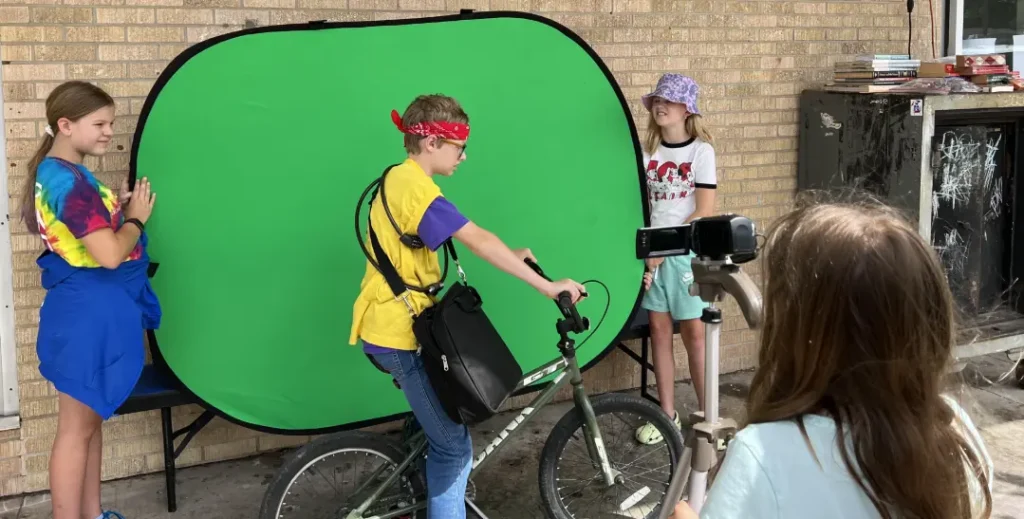
Film Kids Austin camps give kids the chance to step into a real movie-making experience, where they pitch ideas, act, film, and direct their own projects from start to finish. It’s a highly collaborative, confidence-building environment that strengthens storytelling, creativity, and teamwork skills.
Austin Soundwaves
Ages 7-11 | East Austin
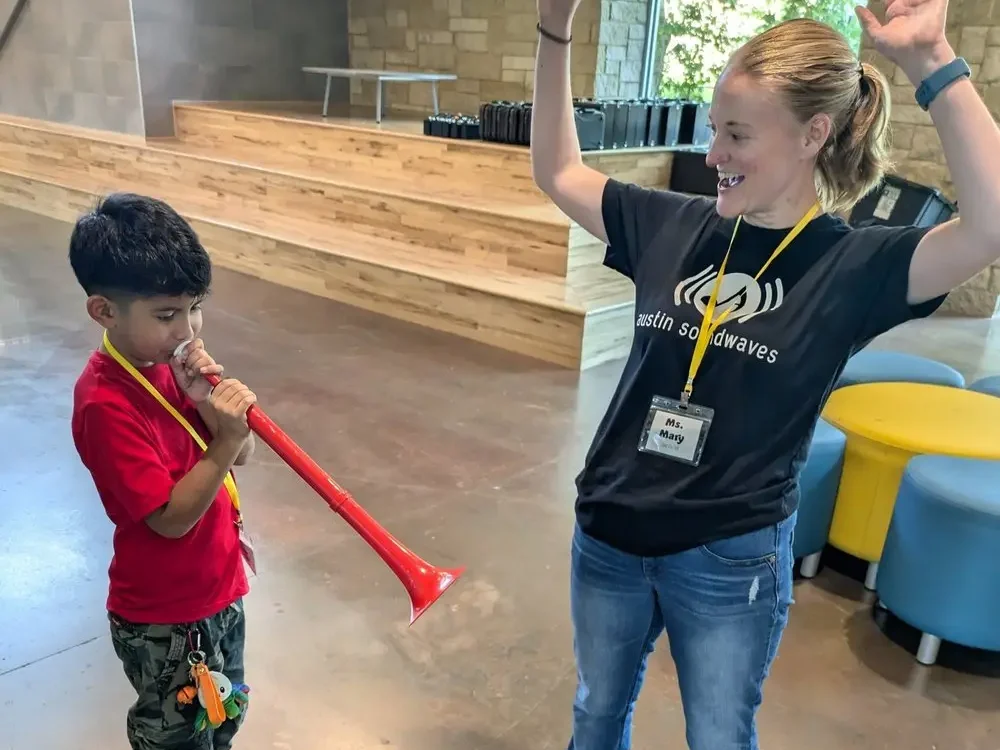
Austin Soundwaves camps immerse kids in music through hands-on songwriting, instrument exploration, and group collaboration. It’s a creative, confidence-building environment where kids develop their musical voice while learning to perform and create together.
Shine on Performing Arts
Ages 4-16 | Cedar Park
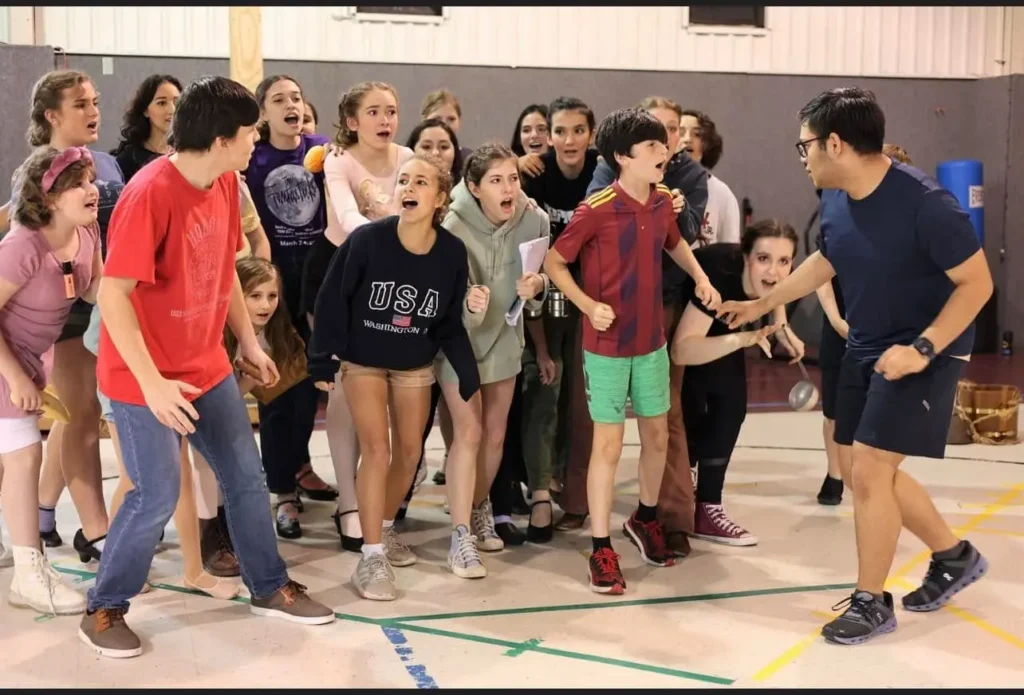
Shine On Performing Arts camps immerse kids in the full theater experience, from acting and singing to dance, tech, and production, often culminating in a live performance. It’s a supportive, all-abilities environment where kids build confidence, creativity, and leadership skills both on and off the stage.
🌟 Best Mixed Activity Programs
Camp Half-Blood
Ages: 9-13 | South Austin

Inspired by the Percy Jackson book series, Camp Half-Blood immerses kids in a world of quests, teamwork, and adventure. Campers participate in themed games, challenges, and storytelling experiences that bring myths to life while fostering community and imagination.
Steve & Kate’s
Ages 4-12 | North Austin

Steve & Kate’s Camps give kids the freedom to choose their own activities, from coding and baking to sports and filmmaking, empowering them to design their day based on their interests. This self-directed approach builds independence, confidence, and decision-making skills, all while keeping kids engaged and excited to learn.
EP Sports Academy
Ages 2-15 | South Austin
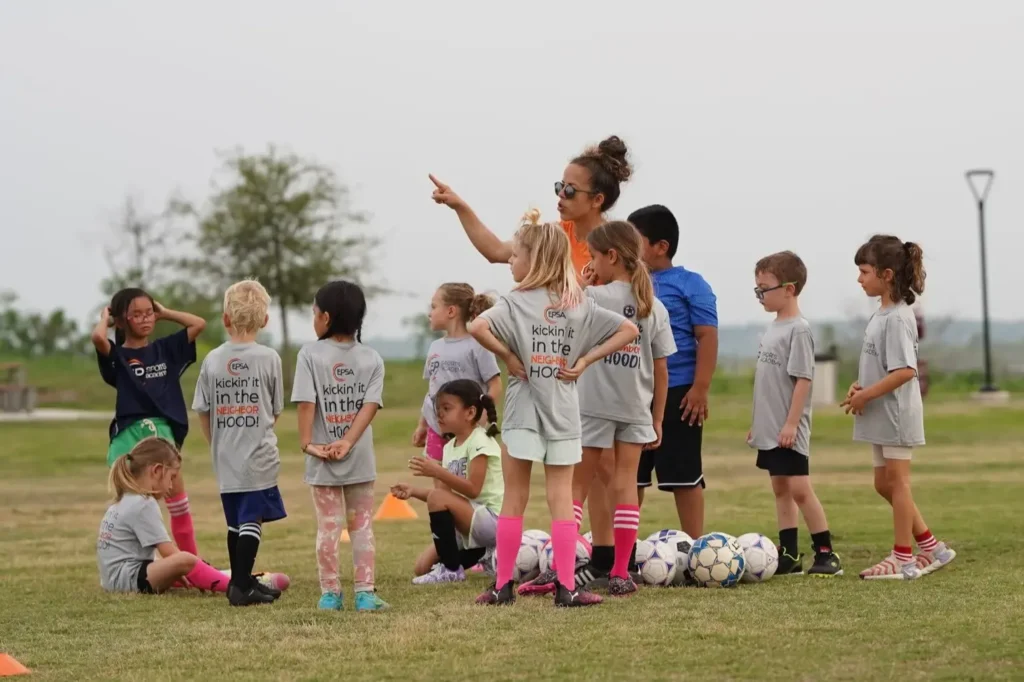
EP Sports Academy camps keep kids active, engaged, and growing through a mix of sports, games, and teamwork in a high-energy, supportive environment. With experienced coaches and small group sizes, kids build confidence, coordination, and leadership skills while having a blast.
Apex Kids Camps
Ages 6-11 | Multiple Locations

Apex Kids Camps are high-energy, play-based camps where kids stay active through games, sports, and team challenges, all led by engaging coaches who double as positive role models. It’s more than just fun, kids build confidence, leadership skills, and strong social connections in an environment designed to keep them moving and inspired.
Austin Summer Camp Planning: Insider Tips
Mix Camp Types Throughout Summer: Alternate intense specialty camps with relaxed day camps to prevent burnout while maintaining engagement.
Consider Commute Times: Prioritize camps within 20 minutes of home or work. That amazing camp across town loses appeal after week one of long drives.
Build in a “Test Week” Early: Book early as a trial: many of our provider partners on Recess have no school day camps. If your child loves it, book more weeks with that provider. If not, pivot.
Ask About Financial Assistance: Many Austin camps offer 10-15% sibling discounts, need-based scholarships, payment plans, and volunteer opportunities in exchange for reduced tuition.
The Bottom Line
Kids thrive when summer includes a mix of structured learning, social interaction, physical activity, and unstructured free time. The families who achieve this balance most successfully are the ones who plan early, not because they’re overachievers, but because they’re reducing their own stress while supporting their child’s growth.
You don’t need to book your entire summer today. But securing one or two anchor weeks in advance? That’s the move that protects your sanity, saves you money, and ensures your child has the developmental experiences they need to return to school confident and engaged.
Ready to start planning? Browse 100+ vetted Austin summer camps on Recess.